Thursday, 12 November 2015

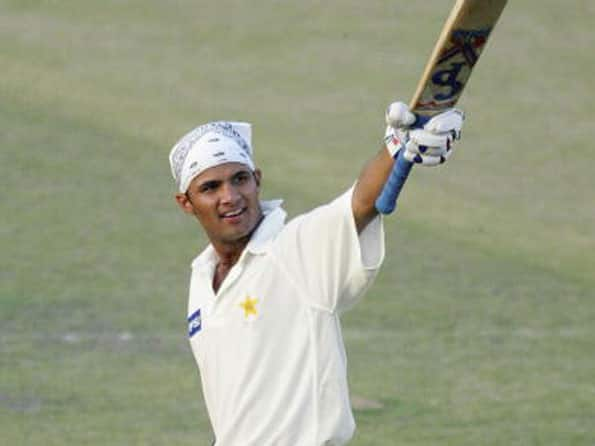
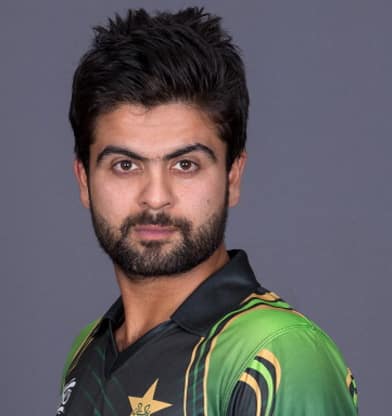
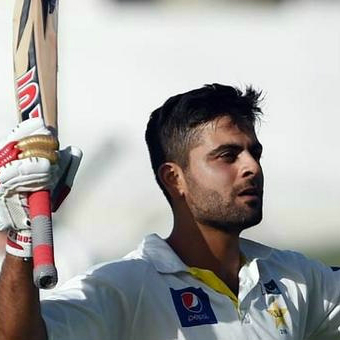
Ahmed Shehzad

Ahmed Shehzad Biography

source link (google.com)

Ahmed Shehzad, the emerging star of Pakistani cricket team was born on 23rd of November 1991 in the city of Lahore. Unlike so many Pakistani cricketers he has come from an educated background and that thing reflects from his behavior.

Domestic Career

In limited-overs domestic cricket Ahmed Shehzad plays for Lahore Lions and in June 2011 during the Faysal Bank T-20 Super Eights Shehzad top scored the innings by scoring 74 of 47 balls imposing a mammoth total of 218 against the opposition Sialkot Stallions who in turn were bowled out for 173 Shehzad took two-catches and a wicket as well he was rewarded man-of the match for his superb performances.
International career

Ahmed Shehzad was yet another teenaged batsman introduced by Pakistan in the big bad world of international cricket. At the age of 17, he made his One-Day International (ODI) and T20 International debut against Australia in the United Arab Emirates (UAE). Soon, he was a part of the side that lifted the ICC World T20 2009. A prolific scorer in age-group cricket, Shehzad worked his way up the ranks after making his first-class debut in 2007.

Shehzad made his debut for Pakistan in a one-day international against Australia on 29 April 2009. In his maiden match he scored one boundary before he was run-out. The following match he scored 40 in an innings that included 4 fours. The third match he scored 43 but this time just scored 2 fours and in the final match of the series he scored 19 with 1 boundary to his name before he was given out leg-before.

These consistent performances meant that Shehzad made his Twenty20 debut against Australia scoring a single boundary before being caught in the deep. Despite a failure in the Twenty20 Shehzad was selected for the Pakistan squad in the 2009 ICC World Twenty20 he only played one-game which was the opening game against England.
Playing Style

Since 2009, he has been the integral part of the team, famous because of his aggressive playing style he has made some quick centuries to prove this. His selection in the world cup squad for 2011 (Held in sub-continent) was turning the point of his career. He performed well in the world cup as he is not only an aggressive opener for Pakistani Cricket team but an energized fielder. He fields often in the point position (which is thought to be the vital fielding position in cricket)

However, Shehzad could not quite establish himself and found himself out of the side after his early introduction. An ODI ton against New Zealand in early 2011 helped him get selected for the World Cup that year, though he did not play the knockout games. Shehzad was axed after the West Indies tour in 2011, though he had scored a ton in one of the ODIs.
Shehzad has a wide range of shots and is talented enough to execute them very late. He doesn’t shy away from making room and going over the off-side in the shorter formats. He is also one of the safest fielders in the Pakistan camp.

Test Career

He took almost four years to make his debut in Test cricket. In the year 2013 a test against Sri Lanka was his first ever test match. He made his comeback two years later in the same setting and established himself thereafter with some phenomenal consistency. The test cap was given to him in small traditional ceremony of cricket by the legend test cricketer of Pakistan “Younis Khan”. He had got his place in T20 internationals in the same year when he made his ODI debut (2009) since then he has been present in almost all the shorter formats.

Controversy

The PCB issued Shehzad an official reprimand after his frequent quarrels with Sri Lankan batsman Tillakaratne Dilshan about Dilshan's past and current religions. Shehzad was also dropped from team after Cricket World Cup 2015 Waqar Younis the team coach said in a press conference that he has some attitude issues.

Ahmed Shehzad


Ahmed Shehzad


Ahmed Shehzad


Ahmed Shehzad


Ahmed Shehzad


Ahmed Shehzad


Ahmed Shehzad


Ahmed Shehzad


Ahmed Shehzad


Ahmed Shehzad


Ahmed Shehzad

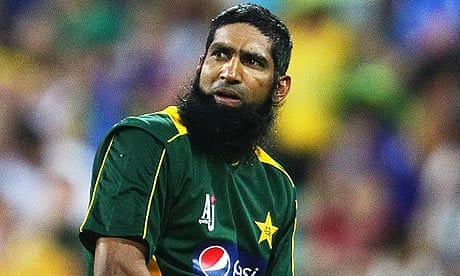
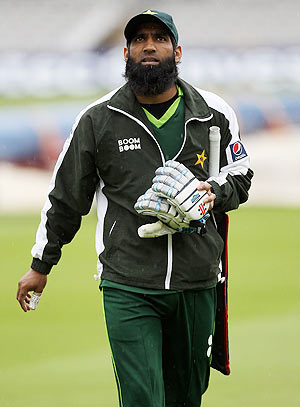
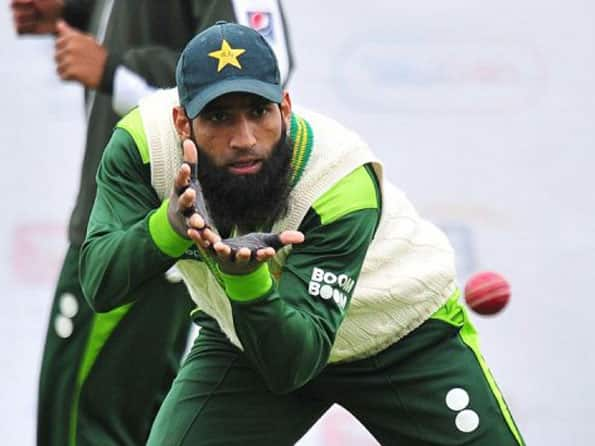
Mohammad Yousuf

Mohammad Yousuf Biography

source link (google.com)

Mohammad Yousuf, born August 27, 1974, is a Pakistani middle-order batsman who went on to become one of the highest run-scorers produced by the country in both Tests and One-Day Internationals (ODIs). 

Career

Yousuf took to cricket from a young age When he was 12. He was spotted by a local gymkhana who asked him to play for them. As he grew up, he joined the Forman Christian College and played for their cricket team as well, before giving up for almost a year in 1994, when he was 20. Within a few months, Lahore realized their folly and requested him to play for them in the 1997-98 season. Within no time of making the switch, Yousuf was picked in the Pakistan squad for a tour of South Africa and made his Test debut at Durban in February 1998. And so it began. The Pakistani run machine was switched on; its first target was the Zimbabwe team. In his first two innings against the African nation in both Tests and ODIs, Yousuf scored half-centuries. Yousuf soon formed a formidable Pakistan middle order along with Inzamam-ul-Haq and Younis Khan that pulverized bowling attacks around the world.

Batting Style

Mohammad Yousuf was easily one of the most delightful batsmen to watch in recent times. With a pragmatic manner of scoring runs, but still elegant enough to make you go wow at his strokes, Yousuf ploughed his way to 7,530 runs in Test matches — the third-highest run-tally among Pakistanis, behind Javed Miandad and Inzamam-ul-Haq) — including 25 hundreds and 46 fifties. In ODIs, he is Pakistan’s second-highest run-getter with 9,554, behind just Inzamam, including 15 centuries and 62 fifties.

Record Achievements

In July 2006, when Pakistan toured England, Yousuf essayed three innings of extreme class: he scored 202 in the first Test at Lord’s, rescuing Pakistan from 68 for 4, batting 7 hours 48 minutes in an innings that included 26 fours and a six, and bowed his forehead to the turf in the direction of Mecca; at Headingley, Yousuf fell 8 short of his third double century in four Tests against England.

In the calendar year 2006, Yousuf scored 1,788 runs in Test matches and scored nine centuries, breaking two records previously held by Sir Viv Richards; both had taken 11 Tests to do so. His average for that year was a Bradmanesque 99.33. In November that year, Yousuf achieved 933 rating points in the ICC Test Rankings for batsmen, which was the 10th highest figure ever achieved; it got him to a personal best ranking of No 2 in the world, behind an equally prolific Ricky Ponting. Thus, it came as no surprise when Yousuf was named ICC Test Player of the Year.

Conversion to Islam

Yousuf’s faith as a Christian was always a taboo topic right from the beginning, but perhaps never came to the fore in the initial stages of his career; at least nothing significant was reported about it. He had married a Christian woman and things seemed normal. But suddenly, one fine day in 2005, news broke that Yousuf had converted to Islam. Yousuf Youhana had become Mohammad Yousuf. The earlier clean shaven look was replaced by a flowing beard that grew with years. His family was shocked and expressed anger at the decision. He had thus become only the fourth Christian to play cricket for Pakistan after of Wallis Mathias, Antao D’Souza and Duncan Sharpe, an Anglo-Pakistani.

Captaincy and Controversy

March 10, 2010, Captain Yousuf and his predecessor, Younis, were banned from playing for Pakistan in any format for an indefinite period. With both Yousuf and Younis being on the wrong side of 30, not many expected them to play for Pakistan again, at least till Butt was still at the helm. Yousuf’s case was particularly perplexing, as he hadn’t done anything so grave as to warrant an indefinite ban. He wasn’t the first captain to experience a total series whitewash and had agreed to undertake leadership of the side after Younis had unceremoniously given up in 2009 following match-fixing allegations.

At the end of March, Yousuf announced his retirement from international cricket in protest. “I have received a letter from the PCB suggesting that my presence in the team is harmful for the team and so I announce my retirement from international cricket,” Yousuf said. In May 2013, some media channels reported that Yousuf had retired from international cricket. However, Yousuf denied the reports and said, “I am already out of the Pakistan team and haven’t played top class cricket for a while now so what is the purpose of me announcing any retirement. The selectors are not considering me for selection and frankly speaking I haven’t had the chance to play regular cricket for a while now.”

Mohammad Yousuf


Mohammad Yousuf


Mohammad Yousuf


Mohammad Yousuf


Mohammad Yousuf


Mohammad Yousuf


Mohammad Yousuf


Mohammad Yousuf


Mohammad Yousuf


Mohammad Yousuf


Mohammad Yousuf

Imran Farhat

Imran Farhat Biography

source link (google.com)

Imran Farhat, born 20 May 1982 is a Pakistani cricketer who has played over 30 Tests and One Day Internationals for Pakistan, opening the batting in most of his international innings.

Career

Farhat made his senior debut aged 15 in a one-day match for Karachi City against Malaysia, together with three other players who went on to play Test cricket (Taufeeq Umar, Bazid Khan and Kamran Akmal). Farhat also evokes Saeed Anwar but only fleetingly; he bludgeons rather than times his runs. He was rather too cavalier in his early appearances in the Test arena, and was promptly discarded after the tour to New Zealand in 2000-01. Three years later, in February 2001, Farhat made his One Day International debut, against New Zealand in Auckland, scoring 20 runs in a chase of 150 to win. 

After the tour of New Zealand, where Farhat played three Tests and three ODIs, he was sent back to domestic cricket before returning against Australia in the third Test of the 2002–03 series, where he made 30 and 22 in an innings defeat. However, he tightened his game and achieved much more success in the 2003-04 season. Tempering his impressive array of shots with better defensive technique, Farhat scored a deluge of runs in the home series against South Africa and New Zealand, being involved in a record four successive hundred partnerships with Yasir Hameed in the one-day internationals against New Zealand. He was retained for the home two-Test series against South Africa in 2003–04, where he scored 235 runs including a maiden Test century in a 1–0 series win, second behind fellow opener Taufeeq Umar.

A month later, Farhat played in an ODI-only series against New Zealand, which Pakistan won 5–0, and Farhat made three fifties along with his second international century, ending with 348 runs at a batting average of 69.60, once again the second-highest amount of runs – this time behind Yasir Hameed. The season was rounded off with another century, this time against India, where he made 101 to help Pakistan gain a 202-run first-innings lead and eventually won the match by nine wickets. However, Farhat tallied 81 runs in the other two matches, which Pakistan lost to lose the series 1–2. He also notched up his first century in both Tests and ODIs during this season, and then went on to score a vital 101 in Pakistan's victory against India in the Lahore Test. But since the India series, he has fallen away.

Farhat was less impressive the following season, however, and in four Tests, two against Sri Lanka and two against Australia, he only passed fifty twice, ending the season with 199 runs at 24.87 before the selectors left him out for the third Test of the series with Australia. In September 2004, just before the 2004–2005 season, he had been dropped from the ODI side following the 2004 Champions Trophy, as he had failed to pass 40 with any of his last ten innings, and that included 38 not out against the non-Test nation of Kenya, 20 against ODI debutants Hong Kong and 24 against Bangladesh.

He continued to score heavily in the domestic competitions and a century in a practise game against the visiting Indian team was rewarded with a place in the squad to take on India in the Test series (2006). He returned to Test cricket in style, with an important half century in the deciding third Test at Karachi. He scored a brilliant unbeaten century in the final test against New Zealand in 2009. His brother Humayun Farhat has also played International cricket for Pakistan.

Farhat’s finest moment came against New Zealand at Napier in 2009-10 when he carried his bat through an innings. Pakistan were bowled out for 223, but Farhat had batted through, scoring 117 not out when nobody else crossed 25.

Records

Farhat has an admirable First Class record — over 11,700 runs at 43.50 with 28 centuries and 51 fifties with a top score of 308. At a time when quality openers were scarce in Pakistan, he was never quite out of national reckoning, but with the emergence of the likes of Mohamad Hafeez, Ahmed Shehzad and Asad Shafiq at the top for Pakistan, it looks difficult for Farhat to make another come-back.

Inconsistent Performance

Imran Farhat is an opening batsman with considerable skill. However, while he scores a bucketful of runs in domestic cricket, international success for extended periods of time has somehow eluded him. A gifted young left-handed opener who threatened at one stage to solve Pakistan's perennial opening conundrum, Imran Farhat had a brief spell in the Pakistan side after success with the national under-19 and A sides. For someone who has been around since 2001, Farhat has managed only a few appearances for Pakistan.

Imran Farhat


Imran Farhat


Imran Farhat


Imran Farhat


Imran Farhat


Imran Farhat


Imran Farhat


Imran Farhat


Imran Farhat


Imran Farhat


Imran Farhat

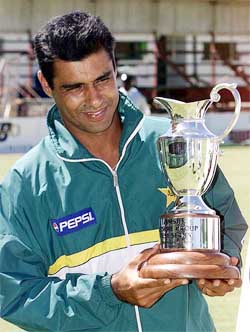
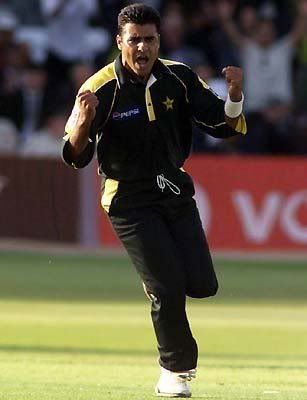
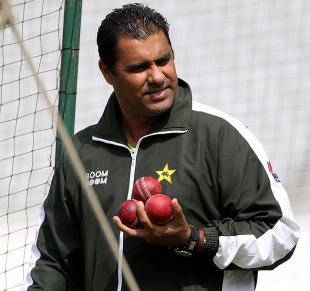
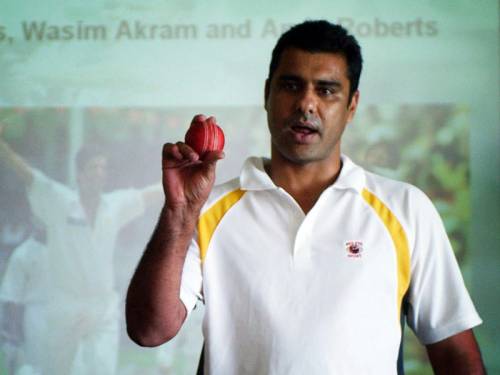
Waqar Younis

Waqar Younis Biography

source link (google.com)

Waqar Younis, Pakistani cricket celebrity was born on 16 November, 1971 is a former Pakistani right arm fast bowler in cricket and widely regarded as one of the best fast bowlers of all time.

Career

Waqar Younis began his cricket career in Pakistan, playing for several First-class cricket clubs. He was eventually discovered by former Pakistan captain, Imran Khan and was selected to be part of the national side. He made his International cricket debut for Pakistan against India on 15 November 1989, in the same match that Indian batsman Sachin Tendulkar also made his debut. Younis took 4 wickets in the drawn match including the wickets of Tendulkar and Kapil Dev. He made an immediate impression with his speed and became known in the cricket media as "Wiki" or the "Burewala Express". Younis along with Wasim Akram opened the bowling attack regularly for Pakistan, becoming a feared and potent attack. His most recognized delivery was an inswinging yorker. At his peak, he developed into a very quick fast bowler and also became famous for achieving a hat-trick in a One Day International match against New Zealand in 1994. He won the English County Championship with Glamorgan in 1997. His return to cricket came with him being appointed the captain of Pakistan, a position he held until his team failed to make an impact in the 2003 Cricket World Cup. He retired from cricket in 2003 after the Pakistan Cricket Board persistently ignored him for national selection.

Bowling Skills

He was best known in cricket for his ability to reverse swing a cricket ball at high speed when bowling at the cricket pitch. He took 373 Test wickets and 416 One Day International wickets during his career. He is considered to be the best exponent of the swing bowling delivery. Younis has the best strike rate for any bowler with over 200 Test wickets.

Younis is one of several Pakistani fast bowlers, beginning with Sarfraz Nawaz, who have been successful at bowling reverse swing. In partnership with Akram, Younis opened the Pakistan bowling attack in the 1990s. Cricket critics and scholars attribute Younis and Akram to be one of the most effective fast bowling partnerships in cricket, due to their ability to swing the ball at high speed. The ability to reverse swing and his speed led to him becoming one of the most talented bowlers in modern cricket.

Younis explained his ability to reverse swing by the manipulation of an old ball; with one side shiny, one side rough, the ball would move in the opposite direction to conventional swing. This led to Younis having the ability to bowl in swingers and out swingers in the cricket pitch and in effect both Younis and Akram became successful in taking wickets by this variation of swing bowling. His fastest delivery in cricket was 153 km/h or 95.1 mph, a delivery he bowled against South Africa in 1993. He was also effective in the use of bouncers or short pitch deliveries; Younis' bowling against South Africa in Sheikhupura in Pakistan, is remembered for his effective use of the short pitched delivery.

Award and Records

Title of Banana swing bowler was given to Waqar Younis because of his unique technique of swinging the ball in the air at very high speed before hitting the ground. In most of his hat tricks he has delivered banana swing balls which were unplayable

Younis was awarded Wisden Cricketers of the Year in 1992 for his sporting achievements. He is also the only bowler to have taken a 5 wickets in an innings in 3 consecutive One Day International matches. He has taken a 5 wicket hauls on 13 occasions in One Day International matches. In terms of deliveries bowled, he has taken the fastest 50, 300, 350 and 400 wickets in One Day International matches and the fastest 150, 200, 250, 300 and 350 wickets in Test matches. Younis holds the record for the best strike rate for any bowler with over 200 Test wickets.

Coaching

In March 2006, he was appointed as the bowling coach for Pakistan. He resigned from this position on 6 January 2007 in protest against the Pakistan Cricket Board decision to retain him only for the Test series against South Africa and not for the subsequent series of five One Day International matches. He was re-appointed as Pakistan's bowling and fielding coach for their tour of Australia in December 2009. In February 2010, Younis was appointed the head coach of Pakistan to lead an inexperienced Pakistan side missing Younis Khan, Mohammad Yousuf and Shoaib Malik to the 2010 ICC World Twenty20 as a consolation with which Pakistan won both Twenty20's comfortably.

This tour was followed by a controversial tour against England as Pakistan headed in to the final Test match needing to win it to level the series 2-2 the News of the World broke a story that Mohammad Amir, Mohammad Asif and captain Salman Butt were involved in Spot-fixing. This saw the three players temporarily suspended and Pakistan lost by an innings and 225 runs their biggest defeat in history. Low team-morale meant the next two T20 matches were won comfortably by England.

Waqar Younis


Waqar Younis


Waqar Younis


Waqar Younis


Waqar Younis


Waqar Younis


Waqar Younis


Waqar Younis


Waqar Younis


Waqar Younis


Waqar Younis

Wasim Akram

Wasim Akram Biography

source link (google.com)

Wasim Akram born on June 3, 1966 in Lahore, Punjab. He was a former Pakistani cricketer with a left-arm fast bowler and left-handed batsman, who represented the Pakistani cricket team in Tests and One-Day Internationals. He is widely regarded as one of the finest fast bowlers ever and holds world records for the most wickets taken in both ODIs (502) and List A cricket (881).

Career

Wasim made his Test debut for Pakistani cricket team against New Zealand in early 1985 and in only his second Test he made his presence felt with a ten-wicket haul. Like a few other Pakistani cricketers of his time, he was identified at club level and bypassed first-class domestic competition, entering international cricket directly. A few weeks prior to his selection into the Pakistani team, he was an unknown club cricketer who had failed to even make it to his college team. He was spotted by Javed Miandad, and as a result of his insisting was it that Wasim was given an opportunity to play for Pakistan. Later that season he paired with Imran, who became his mentor, at the World Championship of Cricket in Australia.

Playing Style

Wasim possessed genuine pace, accurate control of line and length and seam position, and could swing the ball both in and out. With a very deceptive ball-concealing action, he could bowl equally well from both sides of the wicket. His mastery of reverse swing with the old ball meant he was at his most dangerous towards the end of an innings, and earned him the nickname Sultan of Swing.

As well as often being able to find the edge of the bat, Wasim would also focus his attack on the stumps and had a particularly lethal yorker. Of his 414 Test wickets, 193 were taken caught, 119 were taken LBW and 102 were bowled. In partnership with Waqar Younis, he intimidated international batsmen in the 1990s. Together Wasim and Waqar, known as "the two Ws" of the Pakistani team, were one of the most successful bowling partnerships ever.

“Over my 15 or 16 years of playing international cricket in Tests and one-day internationals, Wasim Akram is definitely the most outstanding bowler I've ever faced.”
— Former West Indies batsman Brian Lara.

Wasim was also skilled with the bat and was regarded as a bowling all-rounder. He was especially effective against spinners. However, he liked to slog and was criticized for his lack of big scores and giving away his wicket too cheaply for a player of his talent, when Pakistan, needing six runs in two balls two win the Nehru Cup saw Wasim come out to bat. The first ball he faced was hit out of the ground and secured the cup. 

Records

In his Test career, Wasim took 414 wickets in 104 matches, a Pakistani record, at an average of 23.62, and scored 2,898 runs, at an average of 22.64. In One-Day Internationals, Wasim took a world record 502 wickets in 356 appearances, at an average of 23.52, and scored 3,717 runs, at an average of 16.52. Wasim was the first bowler in international cricket to take more than 400 wickets in both forms of the game, and only Muttiah Muralitharan has since achieved this. Wasim also held the record for the most wickets in Cricket World Cups — a total of 55 in 38 matches. Australia's Glenn McGrath broke the record during the 2007 World Cup, ending with a final tally of 71 from 39 matches

Captaincy

Wasim also captained Pakistan with some success. The high points of his captaincy were the 1996-97 victory in the World Series in Australia, two Test match wins in India in 1998-99 and in 1999, when Pakistan reached the World Cup final for the second time. The low point was the 1996 World Cup in Pakistan and India, when he had to pull out of the crucial quarter final match against India. After Pakistan's defeat, there were angry protests outside his homes, and a government inquiry was launched into the failure. In 1999, he led Pakistan to the brink of victory in the World Cup before they rolled over and gave the final to Australia. This was the start of the match-fixing controversies, as people believed Wasim had set up the match for Australia. 

Controversies

In 1992, after he had been successful against English batsmen, accusations of ball tampering began to appear in the English press, though no video evidence was ever found. This phenomenon, termed reverse swing was relatively unknown in England at the time. A far larger controversy was created when he was alleged to be involved in match fixing. An enquiry commission was set up by Pakistan Cricket Board headed by a Pakistan high court judge Malik Mohammed Qayyum.

Retirement

Wasim retired in 2003, after a brief spell with Hampshire in England. Since then, Wasim has taken up commentary and can currently be seen as a sportscaster for the ESPN Star network. He is married to Huma Mufti, daughter of Mr. Humayaun Mufti. Huma and Wasim have two sons from their marriage of thirteen years.

Wasim Akram


Wasim Akram


Wasim Akram


Wasim Akram


Wasim Akram


Wasim Akram


Wasim Akram


Wasim Akram


Wasim Akram


Wasim Akram


Wasim Akram